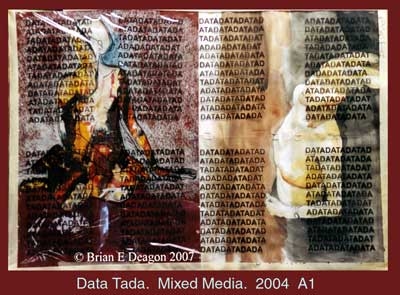
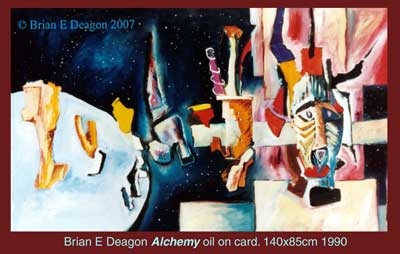
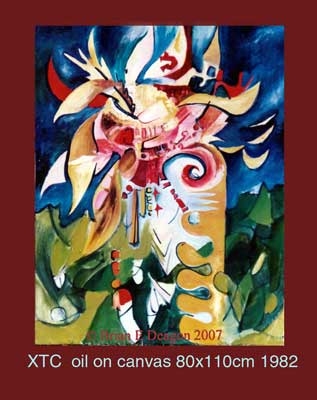
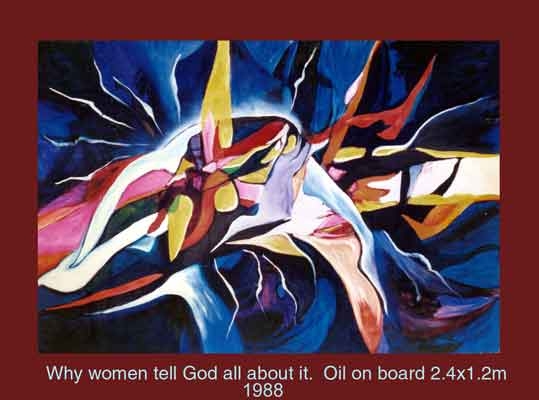
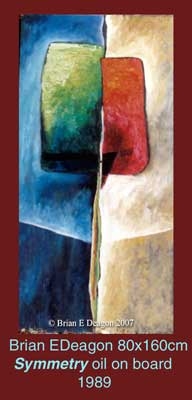
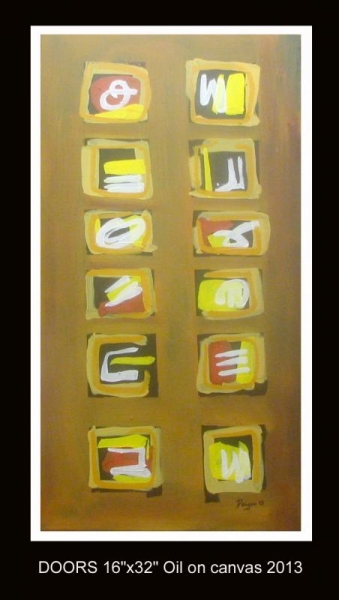
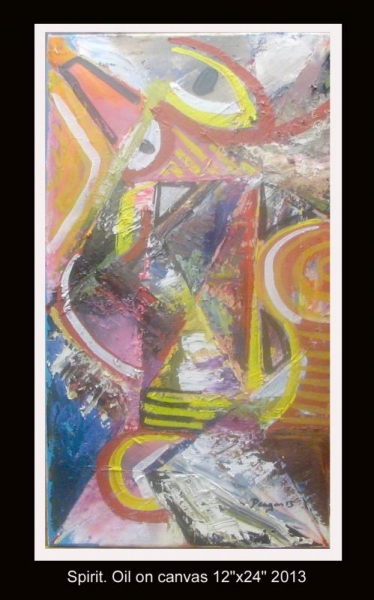
It seems pop groups weren't the only ones to make words of phonetic pronunciation. These improvisations linked to emotional states induced by life events can be great fun to do. Sort of celebratory, but obscure to any viewer, other than the artist. In this sense, abstraction must be seen, and done with the realization that it is an indulgence.
Sometimes you just don't need an explanation.
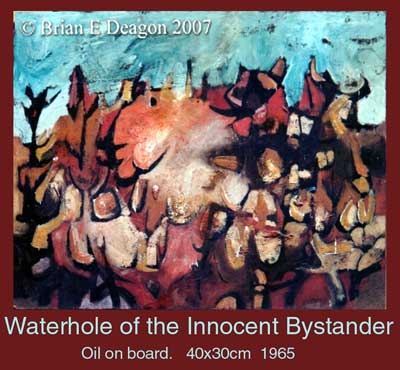
Honestly, I found this nailed to the chook shed to keep the rain out. Its here to show how the "WATERHOLE OF THE INNOCENT BYSTANDER" had got into my head, both technically and pychologically. No, the burnt bits are not deliberate, and the shadow has no meaning either, so don't read into it!
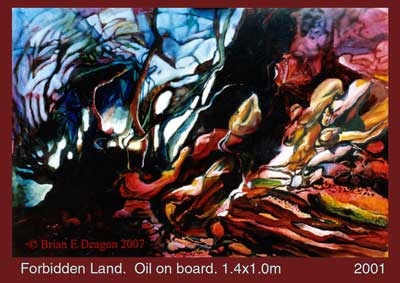
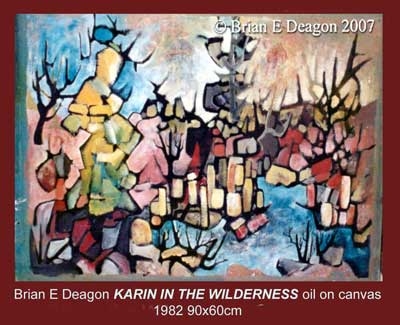
One of the earlier and influential paintings. Sent to Mt ISA on my first teaching position, I found myself in Australia's "outback" drawing dead tree stumps, cattle skeletons, spinifex and ancient geology under a fierce sky. I dreamt the title. All my heroes at the time are here - Motherwell, Daws, Hartung and the Tachistes and Drysdale. Even then, I would not abandon the horizon line and light to drive off into total abstraction.
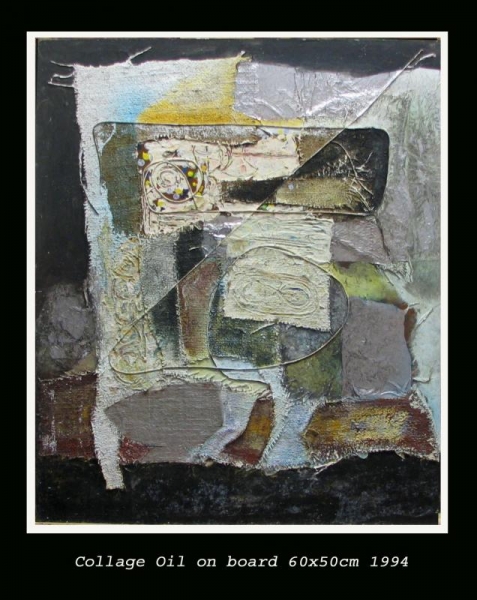
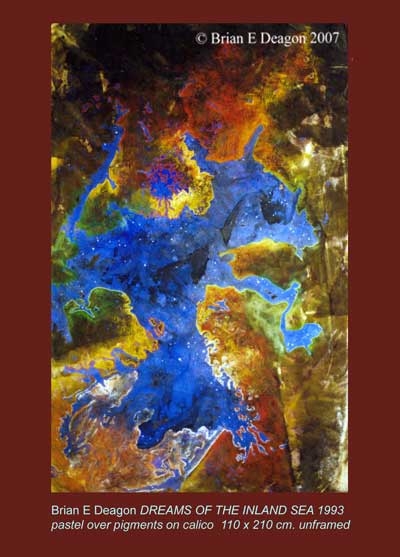
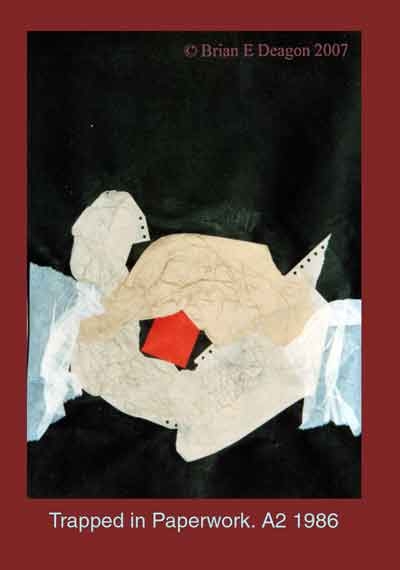
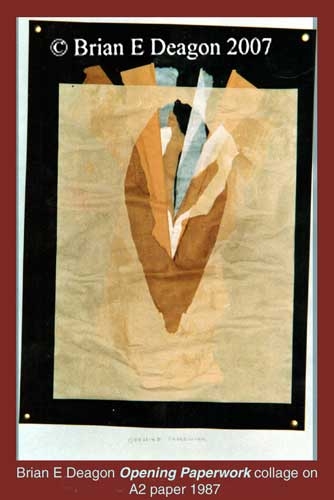
The age of this can be guaged by the scrap computer printout paper. I love collaging tissue and translucent papers. Incidentally, this is a clear demonstration of how white scumbled very thinly over black will give you a blue. People will not believe that you can make all three primaries from yellow and red ochre,black and white. In turn this implies all secondaries. Nothing removes us from the dynamic colour of the old masters quicker than synthetic pigments.
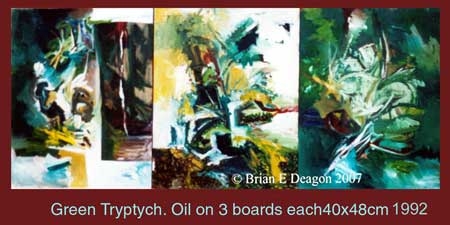
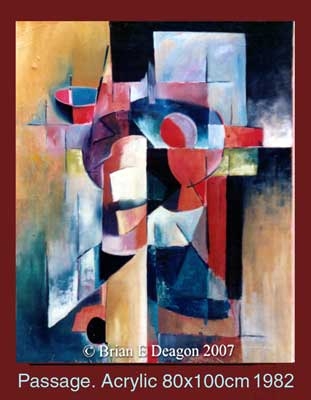
Given a yin-yang from Lynda. White acrylic undercoat, black underdrawing, turpentine washes, then textured impasto over. Derived from the RHS of "PASSAGE", this is the centre panel of a triptych in which the two outer panels were compositionally interchangeable. Used a lot of drybrush scumbling. I seem to have a natural tendency to "halo" forms. Amazing how many people are offended by the "tearing open". It was a reference on my part to Lucio Fontana. It seemed obvious to open a metaphorical space behind the picture plane.
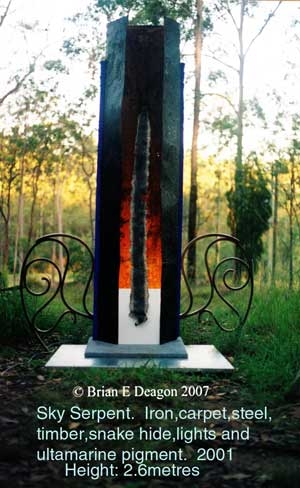
Starting with a carpet python hide I had tanned from a road kill (don't see why we waste them) I wanted to do a "white fella" Rainbow Serpent. This ancestral creator I imagined as a sky creature (the Milky Way). Then I used a floodlight (hidden) shining on the rust of the iron support to create a sunset or sunrise time. In full light the iron support to either side was pure ultamarine pigment. The whole serpent (suspended on fine fishing line) is reflected in a metal lake. To the extreme outside are attached two rocking chair arms, making a phallus. Another serpent.
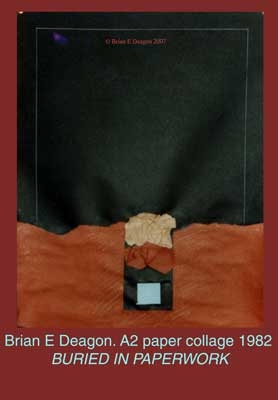
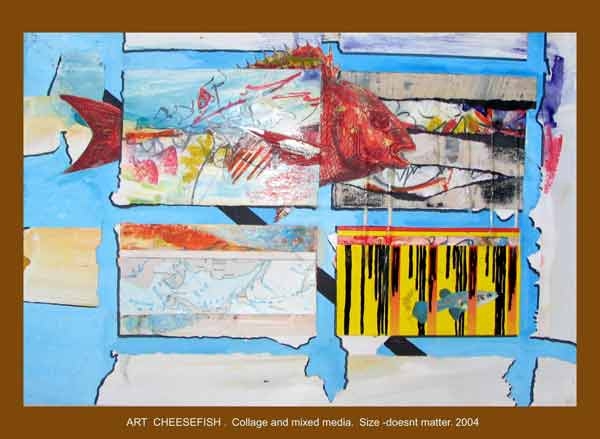
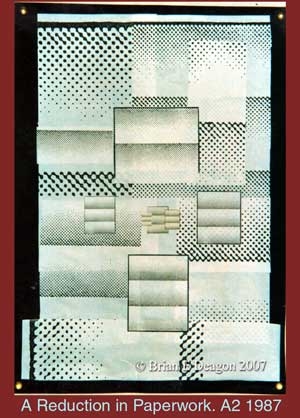
Late one night at Clontarf High I got sick of paperwork. Absentmindedly I began to collage some bits of paper. By dawn I had a series of visual puns. This is one of them.
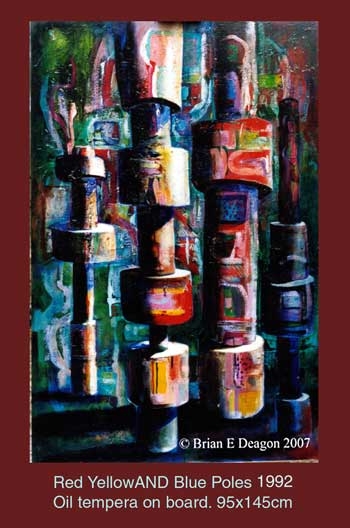
Having made my own oil tempera for some time I began painting with David Paulson. This painting was begun by using up the remains on my palette at the end of the day. I was experimenting with both colour discords and the use of dammar to anneal layers. As I worked, the funerary poles from Bathurst Island emerged. These I made stronger by an ultamarine glaze in the background. Wiping out this glaze(once dry) with methyl alcohol dissolved partial layers of paint leaving a most rich surface. The Title is a reference to Jackson Pollocks infamous "Blue Poles".
Another of the calico collages. Recycled life drawings are the main source of paper. I have thousands of really bad or so so life drawings. Should burn 90% of them. I find often that I need to state the frame by physically drawing it.
This is probably my favourite from the series. The composition consists simply of a "sentence" in each of the four corners. I tell my students to remember that a painting has only one middle, but it has four sides and four corners. What you do with them is vital.
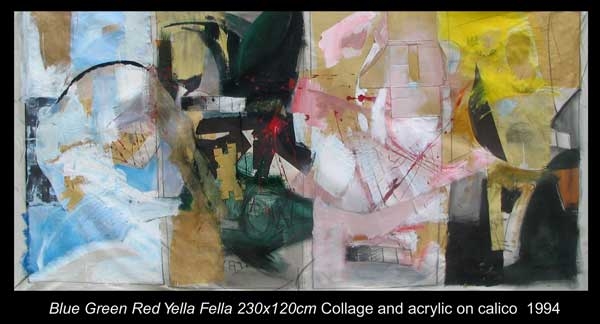
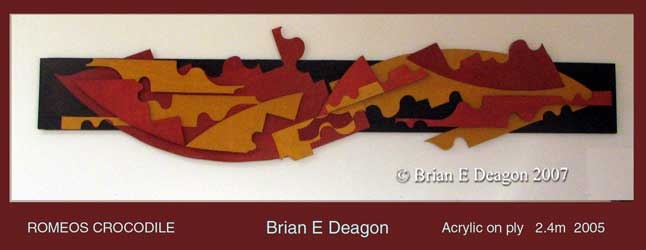
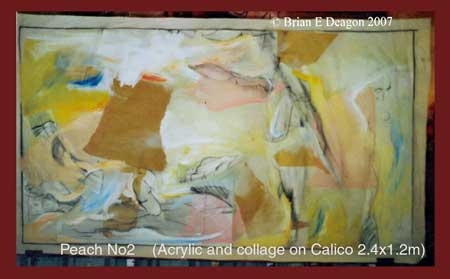
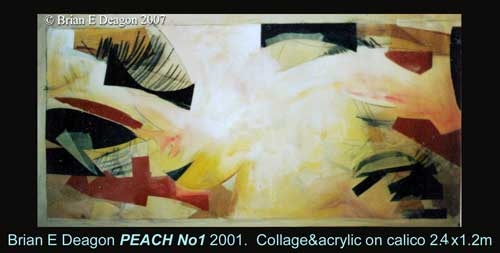
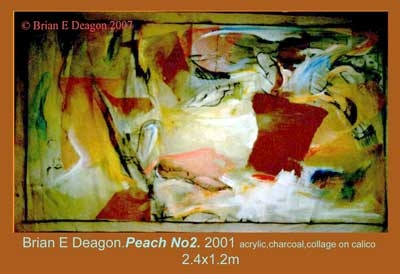
Tired of lugging 2.4m sheets of masonite around I reverted to calico. Recycling life drawings and collaging papers and kitchen cloths glued down with warm rabbit skin glue is a very sensuous procedure. I enjoy cutting in great arcs with the cutting knife and applying the acrylic with housepainters brushes. Essentially, the elements of this series are compositional improvisations.
I am often confounded by how quickly I can get myself into trouble. But I should have realised that the Rorsach Test only reveals what has been engraved, scratched, painted on cave walls, ivory, and clay since the beginning of art. No, I was oblivious to what others would see.
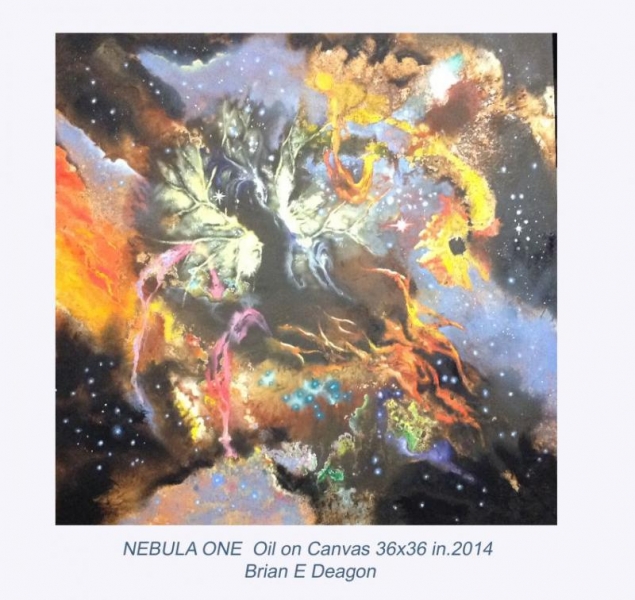
Slowly emerged as week after week i used up paint on my palette. once the image emerged, realist techniques were used.Visitors to my studio would single it out.
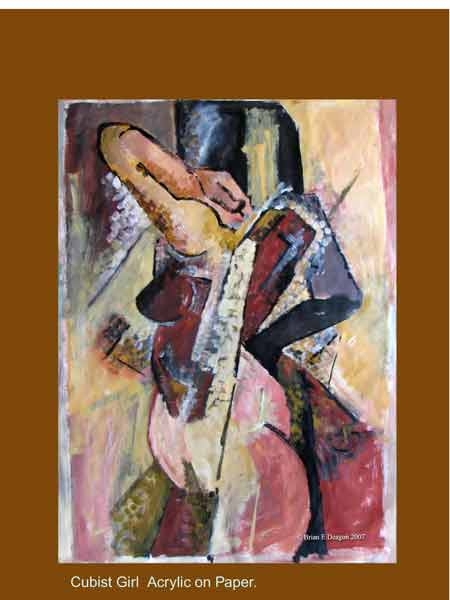
See picture 89 in Gallery 69. My interest in cubism is enduring. It is, along with Fauvism and Surrealism a foundation language of Modernism. And yet it is so often caricatured and misunderstood. The double exposure in photography,reflections in shop display windows suoerimposed on the contents behind the glass,speculation about space and time, all this fed into cubism as much as African masks or Cezanne, and I do not feel it is exhausted any more than the Reniassance.
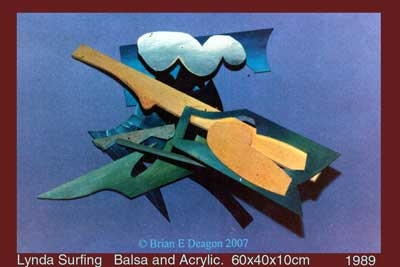
Lynda was afraid of the surf. When she was uncomfortable, her movements would acquire a marionette quality. Here she is diving into a wave.
Oil on canvas. 90x60cm One of a series of paintings built on the early "Waterhole of the Innocent Bystander" Despite the years inbetween, returning to the process involved in working the image is still replete with possibility.
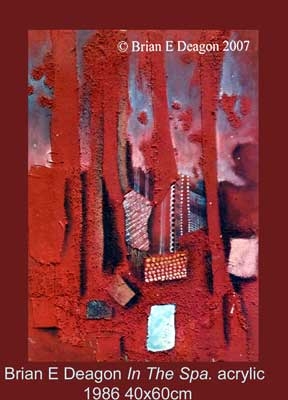
A real problem created for contemporary Australian artists is the very success of indigenous artists. And some hideous conceptual pyrotechnics are used to justify the use of red ochre. And even more effective in establishing "a connection to the land" is to use "site specific" found native ochres. This is a sad and spurious spirituality which would be laughable if not taken so bloody seriously.
I had sketched my proposed set of doors on my Ipad. Didnt recognize the image at first, like Kandindky. Back to Mathieu.
Underlying this are the classic proportional divisions outlined in Aristedes book "Classical Painting Ateler" You can paint like a barbarian, but an informed one. I wanted something crude, rough and powerful: a kind of antidote to refinement perhaps?